🌋 Lassen Volcanic National Park
California
🚗 Check available routes: 🌋 Crater Lake → San Francisco Scenic Road Trip
📍 Location: Northeastern California, southern Cascade Range
🗓️ Best time to visit: July through September
⏳ Recommended stay: 1–2 days
🌐 Official website: National Park Service — Lassen Volcanic National Park
🏞️ About the Park
Lassen Volcanic National Park protects one of the most geologically active landscapes in the Cascade Range.
The park is centered around Lassen Peak, a 10,457-foot volcanic dome that last erupted between 1914 and 1921. Lassen is one of the few places where visitors can see all four major types of volcanoes:
- 🌋 Plug dome
- 🗻 Shield volcano
- 🔺 Cinder cone
- 🏔️ Composite volcano
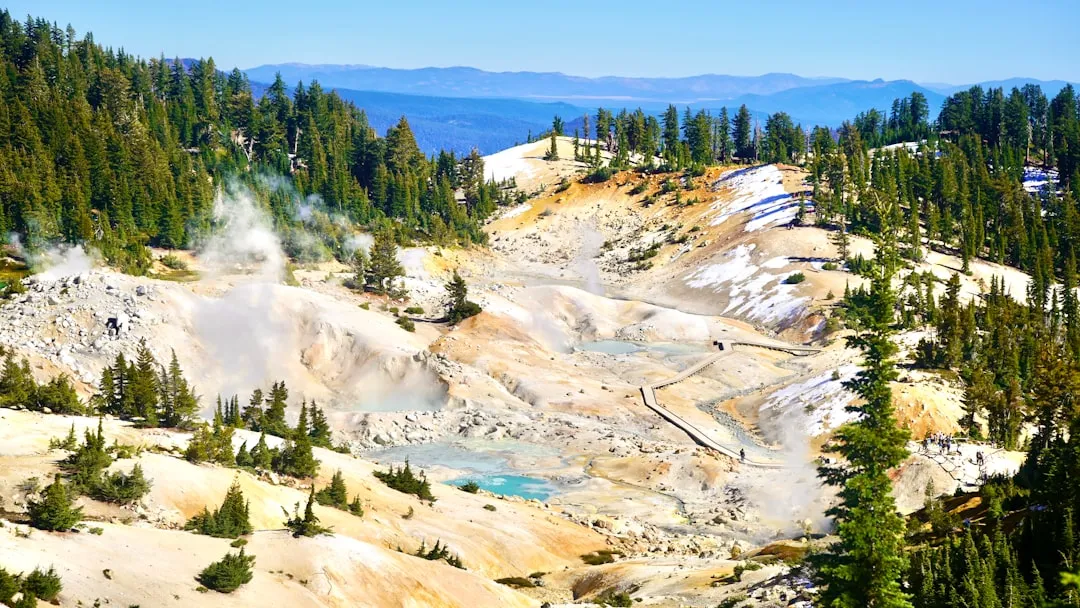
The landscape includes hydrothermal areas, volcanic peaks, alpine lakes, forests, meadows, lava fields, and snow-covered high country.
✨ Why Visit
Lassen is especially known for:
- ♨️ Bubbling mud pots, steam vents, and fumaroles
- 🌋 Diverse volcanic formations
- 🏔️ Lassen Peak and surrounding mountain scenery
- 💙 Alpine lakes such as Manzanita Lake and Summit Lake
- 🌲 Forests, meadows, and wilderness
- 🌼 Summer wildflowers
- 🌌 Excellent stargazing
- ❄️ Deep winter snow and snow recreation
- 🥾 More than 150 miles of hiking trails
- 📸 Dramatic volcanic and alpine photography
📅 Best Months to Visit
☀️ July–September — Best Overall
July through September usually provides the best access to the park highway, hiking trails, lakes, campgrounds, and high-elevation areas.
- July: Most roads and trails are usually accessible, although snow may remain at higher elevations
- August: Warmest and driest conditions, but wildfire smoke is possible
- September: Cooler temperatures, fewer visitors, and generally good road access
The popular Bumpass Hell and Lassen Peak trails can remain snow-covered into early or mid-summer.
Check the current trail conditions before planning hikes.
🌱 May–June — Spring Snowmelt
Most of Lassen can remain snow-covered through May and into June.
During spring:
- The park highway may still be closed to through traffic
- Some lower-elevation trails may be accessible
- Higher trails may require snow travel
- Campgrounds and seasonal facilities may still be closed
- Road-clearing operations may affect access
The park typically clears 30–40 feet of accumulated snow from sections of the main highway each spring.
Opening dates vary significantly by year. Follow the spring road-clearing updates for the latest information.
🍂 October–November — Quiet but Unpredictable
Fall can provide clear skies, cool temperatures, fewer visitors, and colorful vegetation around lakes and meadows.
However:
- Snowstorms can arrive quickly
- Campgrounds and services begin closing
- The park highway may close temporarily or for the season
- Nights can be below freezing
The main highway has historically closed for winter as early as October or as late as December.
❄️ December–April — Winter Season
Lassen receives up to approximately 30 feet of snow during the snowy season, typically November through May.
Winter activities include:
- Snowshoeing
- Cross-country skiing
- Backcountry skiing
- Sledding
- Winter camping
- Snow photography
Vehicle access is limited because the park highway closes to through traffic. Visitors can normally reach areas near the Southwest Entrance and Northwest Entrance.
Review the official winter-visit guidance before traveling.
🌦️ Weather and Elevation
Weather varies significantly across Lassen because elevations range from approximately 5,000 feet to more than 10,000 feet.
In summer, visitors should expect:
- Warm days at lower elevations
- Cool mornings and evenings
- Lower temperatures near Lassen Peak
- Occasional afternoon thunderstorms
- Strong sun exposure at high elevation
The National Park Service advises expecting roughly a 5°F temperature decrease for every 1,000 feet of elevation gain.
Check the park weather page and mountain-specific forecasts before traveling.
🚗 Access
The park’s main route is the approximately 30-mile Lassen Volcanic National Park Highway, part of California Highway 89.
It connects:
- 🚪 Northwest Entrance near Manzanita Lake
- 🚪 Southwest Entrance near the Kohm Yah-mah-nee Visitor Center
The scenic highway provides access to lakes, trailheads, hydrothermal areas, overlooks, and Lassen Peak.
❄️ Seasonal Highway Closure
The main park highway usually closes to through traffic during winter and spring because of heavy snow.
When closed:
- The Southwest Entrance generally remains accessible to the visitor center
- The Northwest Entrance generally remains accessible to Loomis Plaza and Manzanita Lake
- The central high-elevation highway is inaccessible to vehicles
Use the current conditions page before relying on through access.
🚙 Remote Park Areas
Butte Lake, Warner Valley, and Juniper Lake are reached by separate roads outside the main highway corridor.
These roads may be:
- Unpaved
- Narrow
- Seasonal
- Unsuitable for large vehicles
- Affected by snow, wildfire, washouts, or construction
Download the official park map before traveling because cell service is limited.
🎟️ Entrance and Reservations
Lassen Volcanic National Park is open 24 hours per day, 365 days per year, although road access and facilities vary by season.
For 2026:
- ✅ No reservation is required to enter the park
- 🎟️ A park entrance fee or valid federal recreation pass is required
- 🏕️ Some campgrounds require separate reservations
- 🎒 Wilderness camping requires a free permit
Check the official operating-hours and seasons page for current facility schedules.
💵 Fees
Entrance fees and pass options can change.
Common options include:
- 🚗 Private vehicle pass
- 🏍️ Motorcycle pass
- 🚶 Individual entry pass
- 🏞️ Lassen annual pass
- 🇺🇸 America the Beautiful federal pass
Camping fees are charged separately.
Review the official fees and passes page before visiting.
🏕️ Camping
Lassen has multiple developed campgrounds, including sites near:
- Manzanita Lake
- Summit Lake
- Butte Lake
- Warner Valley
- Southwest Area
Campgrounds vary by season and may include a mixture of:
- Reservable sites
- First-come, first-served sites
- Tent sites
- RV-accessible sites
- Group sites
- Dry camping
Some remote campgrounds may remain closed because of road conditions, repairs, wildfire impacts, or seasonal access.
Use the official camping page to check opening dates, services, fees, and reservation requirements.
♨️ Hydrothermal Safety
Lassen’s hydrothermal areas contain boiling water, acidic pools, thin ground, steam vents, and superheated mud.
Visitors must:
- Stay on designated trails and boardwalks
- Never touch or enter hydrothermal water
- Keep children close
- Obey closure signs
- Avoid walking on snow-covered hydrothermal areas
- Never allow pets into restricted areas
Ground that appears solid may be only a thin crust above boiling water or steam.
🔥 Wildfire and Smoke
Wildfires commonly occur between July and October.
Smoke can affect:
- Visibility
- Air quality
- Trail access
- Roads
- Campgrounds
- Visitor facilities
Check the current conditions page for active closures and smoke impacts before entering the park.
🐻 Wildlife and Food Storage
Lassen supports approximately 300 vertebrate species, including black bears, deer, birds, reptiles, amphibians, and fish.
Visitors should:
- Store food and scented items securely
- Use food lockers when provided
- Never feed wildlife
- Keep campsites clean
- Pack out trash
- Maintain a safe distance from animals
🐾 Pets
Pets are permitted only in developed areas such as:
- Campgrounds
- Picnic areas
- Parking lots
- Paved roads and road shoulders
Pets are not permitted on park trails, including when carried.
Pets must be physically restrained on a leash no longer than 6 feet.
Review the official pet regulations before bringing an animal.
♿ Accessibility
Accessible features are available in selected developed areas, visitor facilities, campgrounds, overlooks, and paved routes.
Accessibility varies based on:
- Snow conditions
- Seasonal road access
- Construction
- Wildfire impacts
- Facility opening dates
The official accessibility page provides details about accessible facilities and service-animal rules.
✅ Before You Go
Check the relevant official page shortly before your visit: