🌊 Glass Beach
California
🚗 Check available routes: 🌋 Crater Lake → San Francisco Scenic Road Trip
📍 Location: Fort Bragg, Mendocino County, Northern California
🗓️ Best time to visit: April through October
⏳ Recommended stay: 1–2 hours
🌐 Official visitor information: Visit Fort Bragg — Glass Beach
🏞️ About Glass Beach
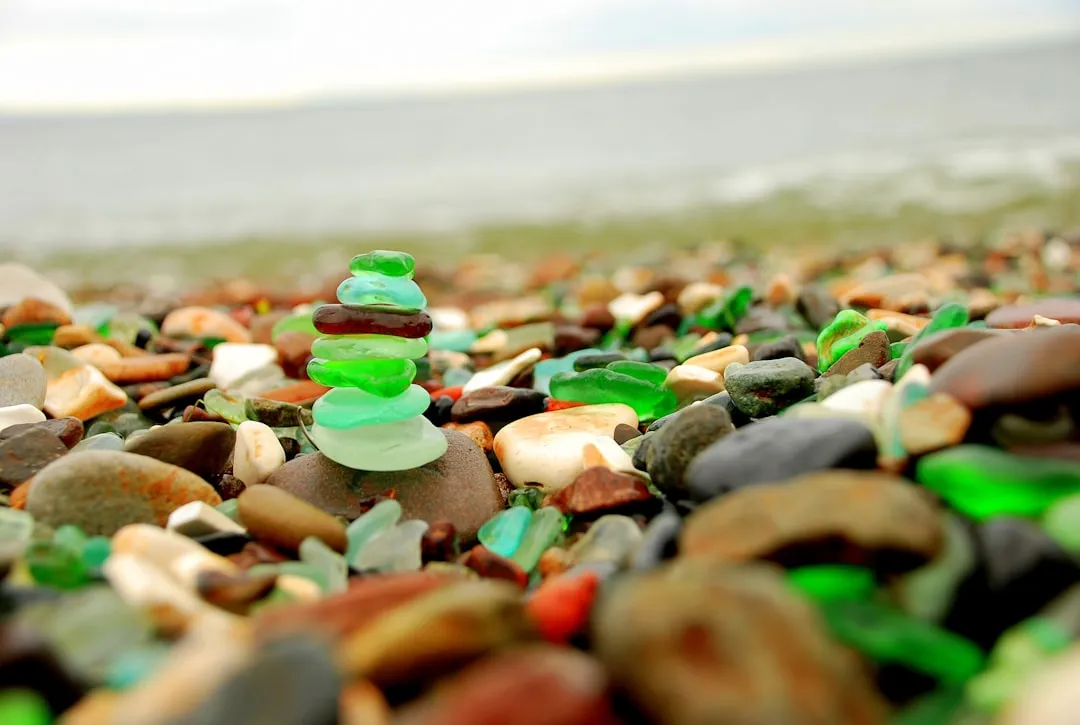
Glass Beach is a distinctive section of the Northern California coast near Fort Bragg, known for small pieces of colorful sea glass scattered among rocks, gravel, and tide pools.
The glass came from historic coastal dump sites used during the first half of the twentieth century. Over many decades, ocean waves broke down and polished discarded glass into smooth, rounded pieces.
Today, the area is reached from the Fort Bragg Coastal Trail near MacKerricher State Park. The shoreline combines rugged cliffs, rocky coves, tide pools, coastal vegetation, and wide Pacific Ocean views.
✨ Why Visit
Glass Beach is especially known for:
- 💎 Colorful sea glass polished by the ocean
- 🌊 Rugged Northern California coastline
- 🐚 Tide pools visible during low tide
- 📸 Coastal and close-up photography
- 🌅 Pacific Ocean sunsets
- 🚶 Easy access from the Fort Bragg Coastal Trail
- 🐦 Seabirds and seasonal marine wildlife
The amount of visible glass changes with tides, storms, erosion, and visitor impact, so the beach may not appear completely covered in glass.
📅 Best Time to Visit
☀️ April–October — Best Overall
Late spring through early fall generally provides the driest and most comfortable conditions.
Coastal fog is common even during summer, especially in the morning. Afternoon conditions may be clearer.
🌊 Visit Near Low Tide
Low tide is usually the best time to see sea glass, tide pools, rocky coves, and exposed shoreline.
Check a local tide forecast before arriving and leave the rocks before the incoming tide limits your exit.
🌧️ November–March — Wetter and Rougher
Winter can bring stronger winds, rain, large waves, muddy paths, and rapidly changing ocean conditions.
🚗 Where It Is
Glass Beach is on the north side of Fort Bragg.
The most common access is from the parking area near the west end of West Elm Street, followed by a walk along the Fort Bragg Coastal Trail.
Nearby MacKerricher State Park protects additional beaches, headlands, wetlands, dunes, and wildlife habitat north of Fort Bragg.
Use established trails and access points, and avoid unofficial paths down unstable bluffs.
🚫 Leave the Glass
Visitors should look at and photograph the sea glass but leave it on the beach.
The official Fort Bragg visitor page asks visitors to “touch but don’t take” so the remaining glass can be preserved for future visitors.
⚠️ Coastal Safety
Potential hazards include:
- Sneaker waves
- Slippery rocks
- Unstable cliff edges
- Strong currents
- Cold water
- Incoming tides
- Uneven surfaces
Stay back from the water during high surf, never turn your back on the ocean, and avoid climbing down steep or eroding bluffs.
🐾 Pets
Pet access varies between the Fort Bragg Coastal Trail, city-managed areas, and nearby state park property.
Keep dogs leashed, clean up after them, and follow posted signs.
♿ Accessibility
The Fort Bragg Coastal Trail includes broad, improved trail sections and ocean viewpoints, but direct access to the rocky beach is uneven and may not be accessible to everyone.
✅ Before You Go
Check current information before visiting:
- 🌊 Glass Beach visitor information
- 🏞️ MacKerricher State Park
- 🌦️ Local weather and coastal fog
- 🌊 Tide and surf forecasts
- 🚧 Coastal Trail closures or access restrictions