🏔️ Kalalau Trail
Hawaii
🚗 Check available routes: 🌺 Kauaʻi Scenic Road Trip
📍 Location: Nāpali Coast, North Shore of Kauaʻi, Hawaiʻi
🥾 Trailhead: Kēʻē Beach in Hāʻena State Park
🗓️ Best time to hike: Drier periods, generally late spring through early fall, while still checking current rain, surf, and trail alerts
⏳ Recommended time: 3–8 hours for a Hanakāpīʻai day hike; 2–3 days for the full backpacking route
🌐 Trail references: AllTrails — Kalalau Trail · Hawaiʻi DLNR — Kalalau Trail
🧭 There are two materially different ways to hike the Nāpali Coast. The Hanakāpīʻai day hike and the full Kalalau backpacking route have different difficulty, reservation, equipment, and risk requirements. Do not treat them as interchangeable.
📊 Route Comparison
| Metric | Option 1 — Hanakāpīʻai Day Hike | Option 2 — Full Kalalau Trail |
|---|---|---|
| 🥾 Distance | 4 miles round trip to the beach; approximately 8 miles with the falls extension | Approximately 11 miles one way; 22 miles round trip |
| 📈 Elevation | Approximately 1,000 feet to the beach; around 2,000 feet with the falls extension | Approximately 5,000+ feet of cumulative gain over the round trip |
| ⏱️ Typical time | 3–5 hours to the beach; 6–8 hours with the falls | One full hiking day each direction |
| 🔁 Route type | Out and back | Out and back with overnight camping |
| 🚦 Difficulty | Moderate to strenuous | Extremely strenuous and exposed |
| 🎟️ Required access | Hāʻena State Park entry, parking, or shuttle reservation | Nāpali Coast State Wilderness Park camping permit |
| 🏕️ Camping | Not permitted as a normal day-hike extension | Allowed only in authorized areas under the permit |
| 📶 Cell service | Unreliable | Generally unavailable beyond the developed park area |
Distances and elevation totals vary by GPS recording, weather detours, campsite location, and how much of Kalalau Valley is explored.
🌿 About the Trail
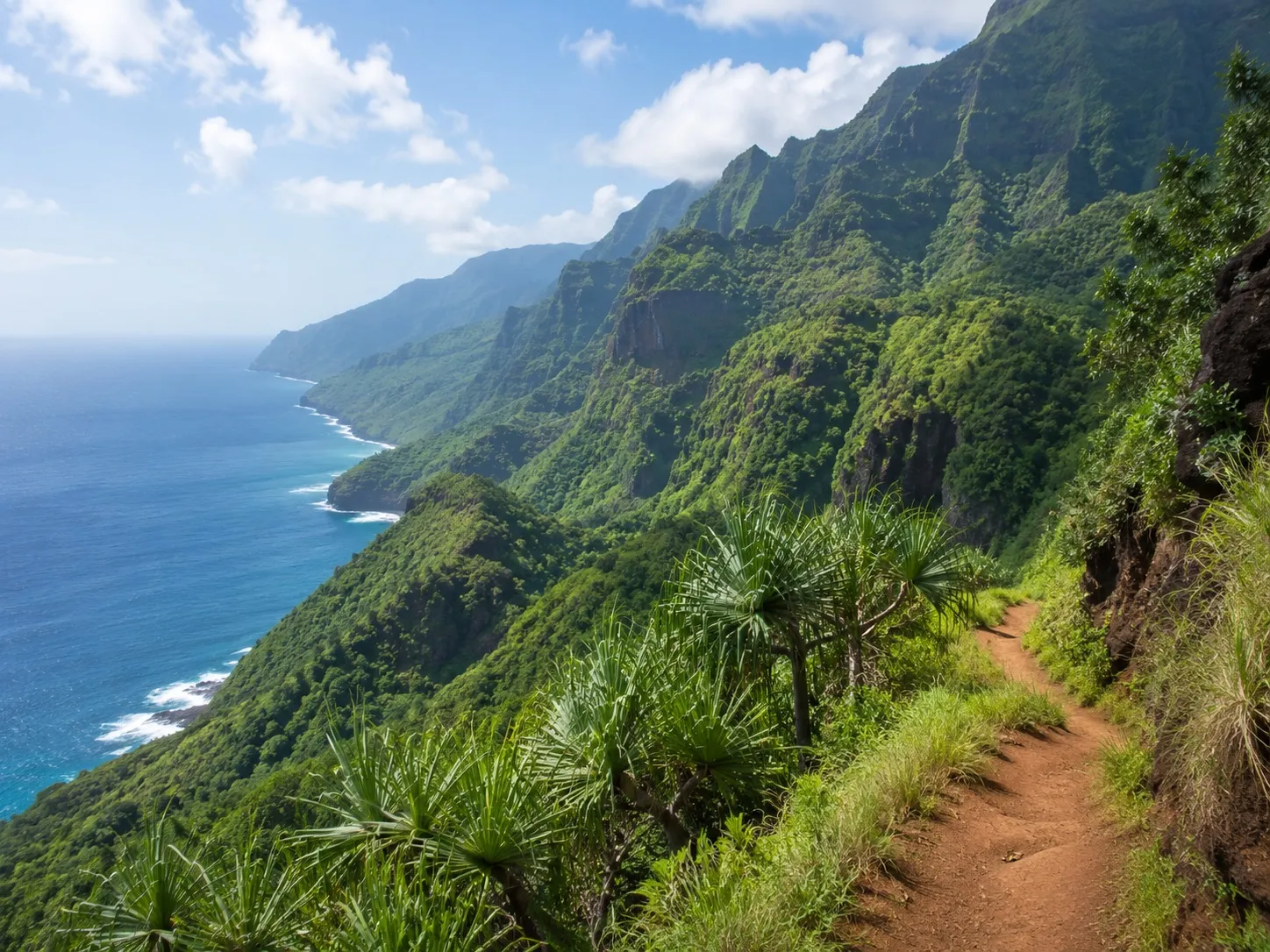
The Kalalau Trail begins near Kēʻē Beach and follows the rugged Nāpali Coast through tropical valleys, exposed sea cliffs, stream crossings, forest, and steep red-dirt slopes.
The first two miles lead to Hanakāpīʻai Beach and are the portion most commonly completed by day hikers. From Hanakāpīʻai, hikers may turn inland for the waterfall extension or return to Kēʻē.
Beyond Hanakāpīʻai Valley, the trail becomes a remote wilderness backpacking route. It crosses several valleys and narrow cliff-side sections before reaching Kalalau Beach. The route is beautiful but physically punishing, weather-dependent, and far removed from normal emergency services.
✨ Why Hike It
The Kalalau Trail is especially known for:
- 🌊 Expansive Nāpali Coast views
- ⛰️ Dramatic fluted sea cliffs
- 🌴 Tropical valleys and dense vegetation
- 💧 Waterfalls, streams, and river crossings
- 🏖️ Remote beaches
- 🌅 Sunrise and sunset views from the coast
- 📸 Some of Kauaʻi’s most recognizable landscapes
- 🥾 A demanding wilderness backpacking experience
Option 1 — Partial Day Hike to Hanakāpīʻai
🏖️ Hanakāpīʻai Beach
The practical option for most Kauaʻi visitors is the out-and-back hike from Kēʻē Beach to Hanakāpīʻai Beach.
🥾 Distance: Approximately 4 miles / 6.4 km round trip
📈 Elevation gain: Approximately 1,000 feet / 305 m
⏱️ Time: 3–5 hours
🟠 Difficulty: Moderate to strenuous
🌐 Route reference: AllTrails — Hanakāpīʻai Beach via the Kalalau Trail
The trail climbs immediately from Kēʻē, gaining elevation through humid forest before opening to broad views along the Nāpali Coast. It then repeatedly rises and descends across uneven terrain before dropping into Hanakāpīʻai Valley.
Expect:
- Steep and sustained climbs
- Wet roots and uneven rock
- Deep mud after rain
- High humidity and limited breeze
- Slippery descents
- An unbridged stream crossing near the beach
- Little margin for rushing back to a shuttle departure
🌊 Beach Safety
Hanakāpīʻai Beach is not a dependable swimming beach.
Powerful shore break, rip currents, changing surf, and the absence of a protective reef can make entering the water deadly. Stay well back from the shoreline during high surf, never turn your back on the ocean, and do not assume calm-looking water is safe.
💧 Hanakāpīʻai Falls Extension
Hikers with enough time and fitness can continue inland from Hanakāpīʻai Beach through the valley to Hanakāpīʻai Falls.
🥾 Distance: Approximately 8 miles / 12.9 km round trip from Kēʻē
📈 Elevation gain: Approximately 2,000 feet / 610 m
⏱️ Time: 6–8 hours; slower hikers may need longer
🟠 Difficulty: Strenuous
🌐 Route reference: AllTrails — Hanakāpīʻai Falls Trail
The inland trail is rougher and less predictable than the coastal section. It follows the valley through thick vegetation and requires multiple stream crossings over wet, unstable rocks.
Expect:
- Repeated stream crossings
- Mud, slick boulders, and roots
- Route-finding around flood damage
- Falling-rock risk near steep valley walls and the waterfall
- A long, tiring return climb to Kēʻē
- Rapidly changing water levels during heavy rain
⚠️ Do not enter Hanakāpīʻai Valley when heavy rain, flash flooding, or thunderstorms are possible. Rain can fall in the mountains even when the coast appears clear, causing the stream to rise quickly and trap hikers.
🎟️ Day-Hike Reservation Requirements
Non-Hawaiʻi residents need advance access through the Go Hāʻena reservation system.
The usual day-use options are:
- 🚐 Shuttle + park entry
- 🚗 Parking + park entry
- 🎟️ Park entry only, when arriving through an allowed alternative method
A valid reservation permits access to Hāʻena State Park, Kēʻē Beach, Hanakāpīʻai Beach, and the Hanakāpīʻai Falls route.
It does not authorize hiking beyond Hanakāpīʻai Valley toward Hanakoa or Kalalau.
Parking is extremely limited. The shuttle is normally the more realistic choice, but hikers must plan around the booked boarding and return schedule.
⏰ Day-Hike Timing
Start as early as your reservation permits.
For Hanakāpīʻai Beach:
- Allow at least 1.5–2.5 hours each way
- Add time for mud, photographs, the stream crossing, and breaks
- Begin the return before fatigue or weather becomes a problem
For Hanakāpīʻai Falls:
- Treat it as a full-day hike
- Do not start the waterfall extension late
- Know the final shuttle time before leaving the trailhead
- Turn around when timing, weather, or stream levels become unfavorable
Do not rely on the optimistic completion time shown by a fitness app. Trail congestion, rain, mud, heat, and stream crossings can materially slow the route.
Option 2 — Full Kalalau Trail With Overnight Camping
The full trail is an advanced wilderness backpacking trip, not a casual extension of the Hanakāpīʻai hike.
📏 Distance: Approximately 11 miles / 17.7 km one way; 22 miles / 35.4 km round trip
📈 Elevation: Approximately 5,000+ feet / 1,524+ m of cumulative climbing over the round trip
⏱️ Time: Most prepared backpackers need a full day in each direction
🔴 Difficulty: Extremely strenuous
🌐 Official reference: Hawaiʻi DLNR — Nāpali Coast State Wilderness Park
Beyond Hanakāpīʻai, the trail becomes narrower, more remote, and more exposed. It crosses multiple valleys and includes steep drop-offs, eroded slopes, loose rock, mud, roots, and unbridged streams.
Sections commonly discussed by hikers, including the exposed area around “Crawler’s Ledge,” should be treated as serious terrain rather than a sightseeing stop. Conditions vary greatly with rain, wind, erosion, pack weight, and the hiker’s comfort with exposure.
🎟️ Wilderness Permit
A valid Nāpali Coast State Wilderness Park camping permit is required to continue beyond Hanakāpīʻai Valley.
Permits are generally made available up to 90 days in advance through the state reservation system:
Carry accessible proof of the permit while hiking.
A valid Kalalau camping permit grants access through Hāʻena State Park, so a separate day-entry reservation is not normally required for the permit holder. However, transportation and overnight parking are separate issues.
🚗 Overnight Parking and Transportation
An overnight camping permit does not automatically include a parking space.
Limited overnight parking at Hāʻena State Park is sold separately through Go Hāʻena and is available only to eligible Kalalau permit holders.
Important constraints:
- Buy the wilderness permit before attempting to reserve overnight parking
- Overnight parking inventory is limited
- Do not leave a vehicle overnight in unauthorized roadside or day-use parking
- Confirm the number of nights covered by the parking reservation
- Keep permit and parking documentation available offline
- Arrange a legal alternative if overnight parking is unavailable
🏕️ Camping and Itinerary
Camp only in areas authorized by the permit and current state rules.
The primary destination is Kalalau, with Hanakoa used only as an authorized stopover under the applicable permit conditions. Do not create informal campsites or camp at Hanakāpīʻai as a workaround.
2 Days / 1 Night — Minimum Plan
Day 1: Kēʻē → Kalalau Beach
Day 2: Kalalau Beach → Kēʻē
This schedule is possible for strong, efficient backpackers but leaves little margin for:
- Delayed transportation
- Heavy mud
- Rising streams
- Injury
- Heat exhaustion
- Exploring Kalalau Valley
- Drying wet gear
- Waiting for safer weather
3 Days / 2 Nights — Better Default
Day 1: Kēʻē → Kalalau Beach
Day 2: Rest, recover, and cautiously explore permitted areas
Day 3: Kalalau Beach → Kēʻē
For most prepared backpackers, this is the better plan because it avoids immediately repeating the full route while exhausted and provides limited schedule margin.
It is still not a flexible itinerary when major weather is approaching. Do not enter the backcountry expecting to wait out an undefined storm.
💧 Water
Natural water sources may contain pathogens, and availability can change.
Carry enough water to start and use a reliable treatment method such as:
- Filter plus chemical backup
- Purifier suitable for backcountry water
- Boiling when fuel and conditions allow
Do not drink untreated stream or waterfall water.
A filter can clog or break, so carry a backup method. During heavy rain, streams may become silty and harder to treat. During dry conditions, minor sources may be unreliable.
🎒 Essential Backpacking Equipment
Carry equipment appropriate for a remote, wet, tropical trail:
- Proper backpack and rain protection
- Shelter rated for wind and heavy rain
- Sleeping system kept in a waterproof liner
- Enough food plus emergency reserve
- Water filter and backup treatment
- Headlamp plus spare power
- First-aid and blister supplies
- Offline map and navigation backup
- Sun protection
- Insect protection
- Trekking poles
- Traction-appropriate hiking footwear
- Emergency communication device
- Repair supplies
- Waste and hygiene supplies
A phone alone is not an emergency plan. Cell coverage is unreliable or absent along much of the route.
⚠️ Major Hazards
🌧️ Flash Flooding
Streams can rise rapidly from rainfall farther inland. Never attempt to cross a swollen, fast-moving stream.
A missed crossing may mean waiting for water to fall, changing the itinerary, or turning around. Build enough food and schedule margin to handle a delay.
🪨 Mud, Erosion, and Exposure
Rain can turn steep red soil into a slick surface with poor traction. Some sections have severe drop-offs and little room for error.
Travel slowly, maintain spacing between hikers, and avoid dislodging rocks onto people below.
☀️ Heat and Dehydration
The trail combines tropical heat, humidity, steep climbing, and limited recovery options. Start hydrated, replace electrolytes, and avoid carrying an unnecessarily heavy pack.
🌊 Ocean Conditions
Kalalau and Hanakāpīʻai beaches can have dangerous surf and currents. A remote beach is not automatically a safe swimming beach.
🚁 Limited Emergency Access
Rescue may be delayed by darkness, weather, aircraft availability, or the remoteness of the incident. A helicopter evacuation is not guaranteed.
Your group should be capable of handling minor injuries, navigation errors, damaged equipment, and an unexpected extra night.
📅 Best Time and Weather
No month guarantees safe trail conditions.
The route is generally more manageable during relatively dry periods, but brief tropical rain can still create mud, erosion, and dangerous stream crossings.
Before departure, check:
- 🌦️ National Weather Service — Honolulu forecast office
- ⚠️ Active Hawaiʻi watches, warnings, and advisories
- 🌊 Current surf and marine warnings
- 🚧 Hawaiʻi State Parks alerts and Kalalau information
- 🚐 Go Hāʻena reservation and shuttle information
- 🥾 Recent trail reports, while treating unofficial reports as supplemental rather than authoritative
Weather forecasts for the coast do not fully describe rainfall in the mountains and valleys.
🌿 Leave No Trace and Cultural Respect
The Nāpali Coast is environmentally fragile and culturally significant.
Visitors should:
- Camp only where authorized
- Pack out all trash
- Keep food secured
- Use established sanitation practices
- Avoid contaminating streams
- Stay on the trail where practical
- Do not remove rocks, plants, shells, or cultural objects
- Do not enter restricted or sensitive areas
- Respect closures, signs, and restoration zones
- Avoid loud or disruptive behavior
❌ Do Not Attempt the Full Trail When
Do not continue beyond Hanakāpīʻai when:
- You do not hold the required permit
- Heavy rain or flash flooding is possible
- Streams are already high
- You lack backpacking experience
- Your footwear or equipment is inadequate
- A group member is injured, sick, or exhausted
- You are depending on cell service
- You cannot carry and treat water
- Your return transportation or overnight parking is unresolved
- You are starting too late to reach the authorized camp safely
Turning around early is the correct decision when conditions deteriorate.
✅ Before You Go
Confirm every item shortly before the hike:
- 🥾 AllTrails — Kalalau Trail
- 🏖️ AllTrails — Hanakāpīʻai Beach via the Kalalau Trail
- 💧 AllTrails — Hanakāpīʻai Falls Trail
- 🗺️ Hawaiʻi DLNR — Official Kalalau Trail page
- 🏕️ Nāpali Coast State Wilderness Park
- 🎟️ State camping permit portal
- 🚐 Go Hāʻena reservations
- ℹ️ Go Hāʻena information and FAQs
- 🌦️ National Weather Service — Honolulu
- ⚠️ Current Hawaiʻi weather alerts
Reservation rules, trail access, closures, shuttle schedules, and weather conditions can change. Recheck the official sources shortly before the hike rather than relying only on a saved itinerary.